
Long-term weight maintenance is defined as the sustained management of body weight after intentional weight loss, typically measured beyond one year. Most adults who lose weight regain a significant portion within two to five years, which makes maintenance the hardest phase of any weight management effort. The difference between people who keep weight off and those who regain it comes down to consistent habits, biological awareness, and a permanent shift in lifestyle. This article explains what weight stabilization actually requires, grounded in 2026 research, and gives you a practical framework for keeping weight off for good.
Long-term weight maintenance is the ongoing process of sustaining a reduced body weight through consistent behavioral, nutritional, and psychological strategies rather than temporary dieting. Clinicians and researchers define it as keeping lost weight off for at least one year, though the real benchmark for durable success is five years or more. Weight stabilization at this level requires more daily effort than most people expect when they finish a weight loss program.
The challenge is real and biological. The body responds to weight loss by increasing hunger signals and decreasing energy expenditure, making it physiologically harder to stay at a lower weight than it was to reach it. This metabolic adaptation is not a personal failure. It is a predictable biological response that every person who has lost weight must plan around.
Sustainable weight management is not a finish line. It is a permanent operating mode that replaces the temporary mindset of a diet with a durable lifestyle identity.
The behaviors that drive successful long-term weight loss strategies are well documented. Research consistently points to a cluster of habits that separate people who maintain their weight from those who regain it.
Maintaining weight loss long term requires 200–300 minutes of moderate-intensity physical activity per week. That exceeds the general health guideline of 150 minutes per week by a wide margin. The extra activity compensates for the reduced calorie burn that comes with metabolic adaptation after weight loss.

Exercise also directly reduces regain. A meta-analysis of 11 randomized controlled trials found that people who exercised during the weight maintenance phase regained a mean of 2.81 kg less than controls who did not. That is a meaningful difference over time, especially when compounded across years.
Effective weight control techniques on the nutrition side share one trait: they are sustainable, not extreme. The most durable eating patterns include:
Rigid diets fail because life is not rigid. A flexible approach that accommodates a dinner out or a holiday meal is far more effective than a plan that collapses the moment you deviate.
Protein intake and resistance training are critical during maintenance to prevent muscle loss and keep your metabolic rate from dropping further. Muscle tissue burns more calories at rest than fat tissue. Losing muscle during weight loss and then failing to rebuild it is one of the main reasons metabolic rate stays suppressed long after the diet ends.
Pro Tip: Add two to three resistance training sessions per week during maintenance, even if they are short. Thirty minutes of strength work three times a week is enough to preserve the muscle mass that keeps your metabolism working in your favor.
Combined diet and physical activity programs lasting at least 6–12 months with frequent structured contact and resistance-inclusive exercise produce the most durable weight maintenance results. Starting resistance training during the weight loss phase, not after, gives you a significant advantage.
Biology works against you after weight loss. The body’s biological adaptations include increased hunger hormones and reduced energy expenditure. These changes can persist for years, which means the effort required to maintain your weight is genuinely greater than the effort a person of the same weight who never dieted needs to exert.
Understanding this is not discouraging. It is clarifying. When you know the biology, you stop interpreting hunger as weakness and start treating it as a signal to manage with strategy.
“Successful weight maintenance is tied to identity shifts aligning sustainable healthy behaviors and a supportive social network, rather than short-term restrictive tactics.” — Obesity medicine physician with 27+ years of clinical experience
The psychological shift that matters most is moving from a “losing weight” identity to a “person who manages their health” identity. People who frame maintenance as an ongoing management process rather than a temporary phase are significantly more likely to sustain their results. Lapses become data points, not disasters.
Social support plays a concrete role. People with a network that reinforces healthy behaviors, whether through a partner, a community, or a clinical program, maintain weight more successfully than those managing it alone. This is not about accountability pressure. It is about building an environment where your healthy behaviors are the default, not the exception.
Pro Tip: Write down three behaviors that define you as a healthy person, not three goals you are trying to hit. Reading those behaviors daily reinforces the identity that makes maintenance automatic rather than effortful.
Medical support is not a shortcut. For many adults, it is the tool that makes long-term success biologically possible.
GLP-1 and GIP receptor agonist medications, including tirzepatide, work by regulating appetite hormones and slowing gastric emptying. A 112-week clinical trial with a 52-week maintenance period showed that ongoing GLP-1/GIP treatment at maximum tolerated dose was highly effective for adults with obesity to maintain weight loss, while the placebo group experienced significant regain. The medication addresses the same biological adaptations that make maintenance hard without it.
| Support type | Primary benefit | Best used when |
|---|---|---|
| GLP-1/GIP medications | Reduces hunger, supports weight stability | Metabolic adaptation causes regain despite lifestyle effort |
| Resistance training program | Preserves muscle, maintains metabolic rate | Starting weight loss or entering maintenance phase |
| Clinical nutrition counseling | Builds sustainable eating patterns | Struggling with dietary adherence or emotional eating |
| Telehealth weight management | Ongoing physician oversight without clinic visits | Needing consistent support and medication management |
Medication works best as part of a broader plan that includes nutrition, activity, and behavioral support. Stopping medication without those foundations in place is the most common reason for regain after a medically supported weight loss program.
Hormonal and metabolic challenges, including insulin resistance and thyroid dysfunction, can make maintenance harder. A clinical consultation that reviews these factors gives you a complete picture of what your body is working against and what tools are available to address it.
Maintenance fails most often not because of a single bad decision but because of a slow drift that goes unaddressed. The following strategies prevent that drift from becoming regain.
Pro Tip: Set a personal “action threshold,” a specific weight, such as 5 pounds above your maintenance target, that triggers an immediate return to stricter habits. Having a defined number removes ambiguity and prevents slow drift from becoming a full regain.
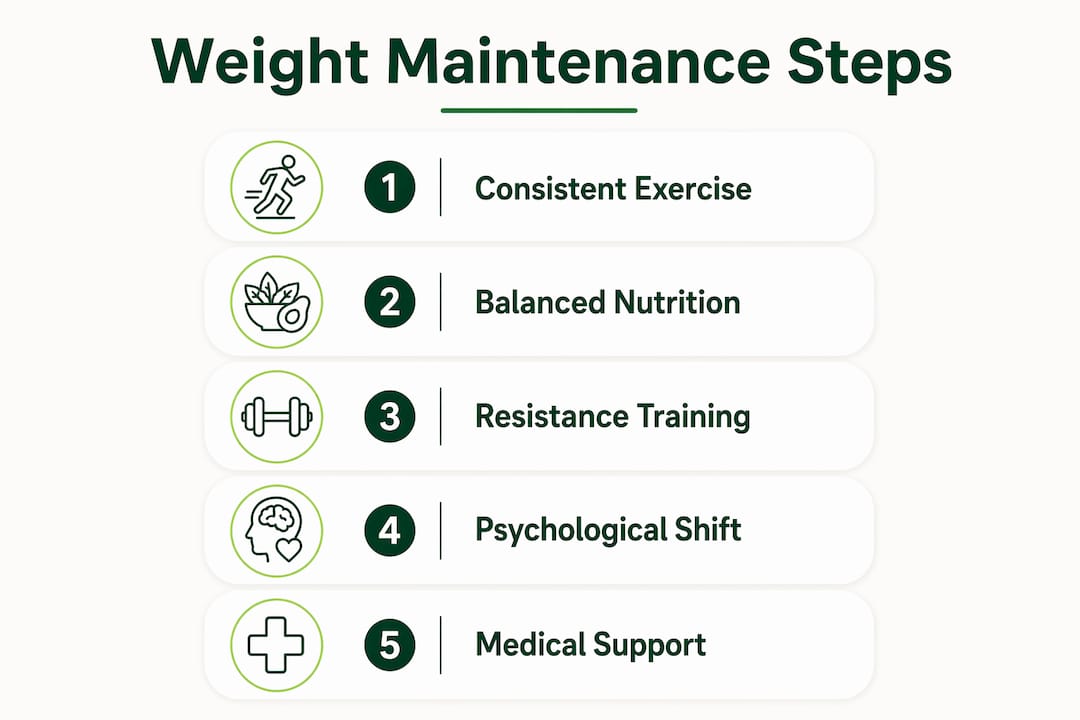
Long-term weight maintenance is a permanent lifestyle commitment, not a phase that ends after reaching a goal weight. The most effective approach combines consistent physical activity above 200 minutes per week, flexible nutrition, resistance training, identity-based mindset shifts, and medical support when biology requires it.
| Point | Details |
|---|---|
| Activity threshold matters | Aim for 200–300 minutes of moderate activity weekly, not just the standard 150-minute guideline. |
| Resistance training is non-negotiable | Strength work preserves muscle mass and prevents the metabolic slowdown that drives regain. |
| Identity drives consistency | Shifting from “dieter” to “person who manages health” produces more durable results than willpower alone. |
| Medical support fills biological gaps | GLP-1/GIP medications address hunger and metabolic adaptation when lifestyle changes alone are insufficient. |
| Early response prevents regain | Catching and correcting small weight gains immediately is the single most effective maintenance habit. |
The conversation around weight maintenance almost always focuses on what to eat and how much to move. Those things matter, but they are not the reason most people regain weight. The real reason is that they never changed who they think they are.
I have seen this pattern repeatedly. Someone loses 40 pounds, feels great, and then slowly returns to the behaviors of the person they were before the loss. Not because they lack discipline. Because they still identify as someone who is “trying to lose weight” rather than someone who simply lives a certain way. The diet was always temporary in their mind, even when they did not say it out loud.
The most durable maintainers I have observed treat their eating and activity habits the same way they treat brushing their teeth. Non-negotiable, not heroic. They do not congratulate themselves for going to the gym. They just go.
The other misconception worth addressing is the idea that regain means failure. Biologically, some regain is almost inevitable without ongoing management. The body fights back. Knowing that in advance changes how you respond to it. A 3-pound gain in a stressful month is not a relapse. It is a signal. The people who succeed long term are the ones who read that signal early and respond without drama.
Flexible, enjoyable lifestyle habits beat rigid perfection every time. If your maintenance plan requires you to be a different person at every social event, it will not last. Build a plan that fits your actual life, and then protect it.
— Eric
Keeping weight off long term requires more than motivation. It requires the right tools, the right medical support, and a plan that adapts as your body does.

Oaklovesyou is an online telehealth platform that connects you with licensed physicians who can prescribe GLP-1 and GIP medications, including compounded semaglutide and tirzepatide, and deliver them directly to your door. The program pairs prescription weight management with physician-led guidance on dosage, nutrition, and strength protocols designed to preserve lean muscle and support metabolic health over the long term. If you are working to maintain weight loss and finding that biology is working against you, Oaklovesyou offers the clinical support to address that directly, without an in-person clinic visit.
Long-term weight maintenance is the sustained management of body weight after intentional weight loss, typically defined as keeping lost weight off for one year or more. It requires consistent physical activity, balanced nutrition, and ongoing behavioral strategies rather than temporary dieting.
Research shows that 200–300 minutes of moderate-intensity physical activity per week is required for long-term weight maintenance. This exceeds the standard 150-minute general health guideline and compensates for reduced calorie burn caused by metabolic adaptation.
The body responds to weight loss by increasing hunger hormones and decreasing energy expenditure. This metabolic adaptation makes it biologically harder to stay at a lower weight, which is why maintenance requires more sustained effort than most people anticipate.
Clinical trial data from a 112-week study shows that ongoing GLP-1/GIP treatment at maximum tolerated dose is highly effective for maintaining weight loss in adults with obesity. Stopping medication without strong lifestyle foundations in place typically leads to regain.
Treating weight management as an ongoing process rather than a temporary phase produces the most durable results. Viewing lapses as temporary setbacks rather than failures, and building a personal identity aligned with healthy behaviors, are the two mindset shifts most strongly linked to long-term success.