Most adults start semaglutide at 0.25 mg once weekly, then titrate roughly every 4 weeks toward a maintenance dose. For weight management, that maintenance target is usually 1.7 mg or 2.4 mg weekly, with a 7.2 mg pathway available under supervision for patients who need more. For type 2 diabetes, maintenance typically lands between 0.5 mg and 2 mg weekly. The full week-by-week breakdown, including tablet schedules and dose-adjustment rules, follows below without specifying the exact numeric doses.
TL;DR:
- Patients should follow a minimum four-week interval at each dose level before escalating to reduce gastrointestinal side effects.
- The maximum weight management dose is 2.4 mg weekly, with some tolerability-based patients staying at 1.7 mg long-term.
- Oral semaglutide (Rybelsus) requires a 30-minute fast before ingestion and increases dosing gradually from 3 mg to 14 mg, with strict timing.
- Compounded semaglutide products pose significant overdose risks due to unstandardized dosing and lack of safety safeguards.
- Dose adjustments are common for those with gastrointestinal sensitivity, older age, or lower body weight, while no dose change is needed for renal or hepatic impairment.
Every FDA-approved semaglutide product follows the same underlying logic: start low, climb slowly, and let the gut adjust before pushing the dose higher. The schedule below reflects the labeling for injectable WEGOVY, which shares its escalation backbone with OZEMPIC, diverging mainly at the top end.
| Weeks on treatment | Weekly injectable dose | Purpose |
|---|---|---|
| Weeks 1–4 | 0.25 mg | Initiation, not a treatment dose |
| Weeks 5–8 | 0.5 mg | First escalation step |
| Weeks 9–12 | 1 mg | Second escalation step |
| Weeks 13 to 16 | 1.7 mg | Third escalation step (Wegovy) |
| Week 16 onward | 2.4 mg (maintenance) | Standard weight-management maintenance |
| After 4+ weeks at 2.4 mg | 7.2 mg (optional) | Additional weight loss under medical supervision |
Two things about that table matter more than the numbers themselves. First, 0.25 mg is never a therapeutic dose for weight loss or glycemic control. It exists purely to let the body adapt to GLP-1 receptor activity before the dose does any real metabolic work. Second, each step requires a minimum of 4 weeks at the prior dose before moving up, per the Wegovy label. Skipping ahead isn’t just off-label. It measurably raises the odds of nausea, vomiting, and GI distress severe enough to derail treatment.
Oral semaglutide, marketed as Rybelsus, follows a parallel but distinct schedule because tablet absorption behaves nothing like a subcutaneous injection. Patients typically start at 3 mg once daily for 30 days purely for tolerability, since that dose doesn’t produce meaningful glycemic or weight effects. After 30 days, the dose usually increases to 7 mg daily, and if additional glycemic control is needed, it can escalate again to 14 mg daily after another 30 days. Rybelsus tablets must be swallowed whole with plain water, on an empty stomach, at least 30 minutes before the first food, beverage, or other oral medication of the day. That timing rule isn’t a suggestion. Taking it with food can cut absorption dramatically.
A few practical points on dose strengths and devices matter here:
That last point deserves more than a passing mention. Compounded versions are often sold in multi-dose vials requiring the patient to draw up their own dose with a separate syringe, a process where a decimal-point error (0.25 mg vs. 2.5 mg, for instance) becomes a real risk rather than a theoretical one. Understanding how dose titration optimizes therapy matters more with these products, not less, because the built-in safety net of a pre-labeled pen simply isn’t there.
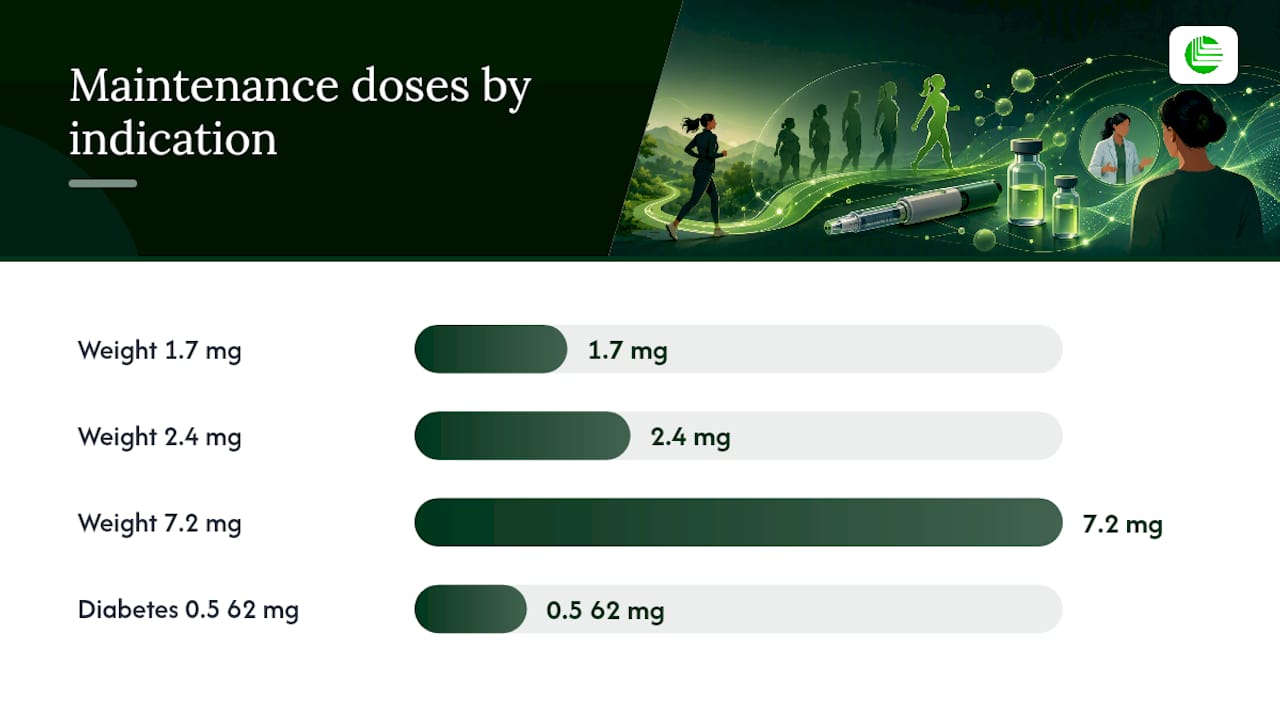
The same molecule, three different destinations. Semaglutide’s maintenance dose depends entirely on why it’s being prescribed, and conflating the weight-loss target with the diabetes target is one of the most common sources of confusion among new patients.
For weight management, the labeled maintenance dose is 2.4 mg weekly, reached after the full 16-week titration. Some patients and prescribers land on 1.7 mg as a long-term maintenance dose instead, usually because 2.4 mg brings GI side effects that outweigh the marginal extra weight loss. Patients who tolerate 2.4 mg well for at least 4 weeks and want additional results may escalate to 7.2 mg, but only under continued medical supervision.
For type 2 diabetes, the ceiling is lower. Ozempic’s maintenance range runs from 0.5 mg up to a maximum of 2 mg weekly, and the decision to push past 0.5 mg or 1 mg is based on ongoing A1C and glycemic response rather than a fixed weight-loss endpoint. Many patients with diabetes stay comfortably at 1 mg weekly indefinitely because it delivers adequate glycemic control without the higher GI burden of 2 mg.
Statistic to know: the PMC clinical review of once-weekly semaglutide trials found that higher maintenance doses consistently produced greater weight reduction, but that benefit came paired with a higher rate of gastrointestinal adverse events. That trade-off, not some fixed rule, is what actually drives the 1.7 mg versus 2.4 mg decision in practice.
Cardiovascular risk reduction, an indication semaglutide has also picked up in select populations, generally follows the same 2.4 mg weight-management maintenance target rather than a separate dosing track, since the outcome data supporting that use was generated at that dose level.
A few factors that push clinicians toward the lower end of a given range:
None of these factors are disqualifying. They’re the reason semaglutide dosing isn’t one-size-fits-all, even within a single indication.
Semaglutide ships in more device formats than almost any other injectable medication on the market, which is exactly why mixing up strengths is a real risk rather than a hypothetical one.
Injectable pens come in single-dose and multi-dose formats depending on the strength. The 0.25 mg, 0.5 mg, and 1 mg Ozempic pens are multi-dose, meaning one pen delivers several weekly injections before it’s empty. Wegovy, by contrast, uses single-dose pens for every strength (0.25 mg through 2.4 mg), plus a dedicated single-dose pen for the 7.2 mg step. Rybelsus tablets come in 3 mg, 7 mg, and 14 mg strengths with no injectable equivalent needed.
Key details worth knowing before your first prescription arrives:
The practical takeaway: know exactly which device your pharmacy dispensed, and don’t assume a pen “looks the same” as your last one just because it’s semaglutide. Strength is printed on the box and the pen itself, and it should match what your prescriber specified for that phase of titration.
Semaglutide is forgiving about timing but strict about consistency. It’s injected subcutaneously (under the skin, not into muscle) once weekly, on the same day each week, at any time of day, with or without food. That flexibility is genuinely useful: switching your weekly dosing day is allowed when needed, as long as your last dose was at least 48 hours earlier.
Pro Tip: If you’re prescribed a dose requiring two injections (common at the 7.2 mg step), give them in the same general body area but space the injection sites roughly 5 cm apart, and swap needles between the two shots.
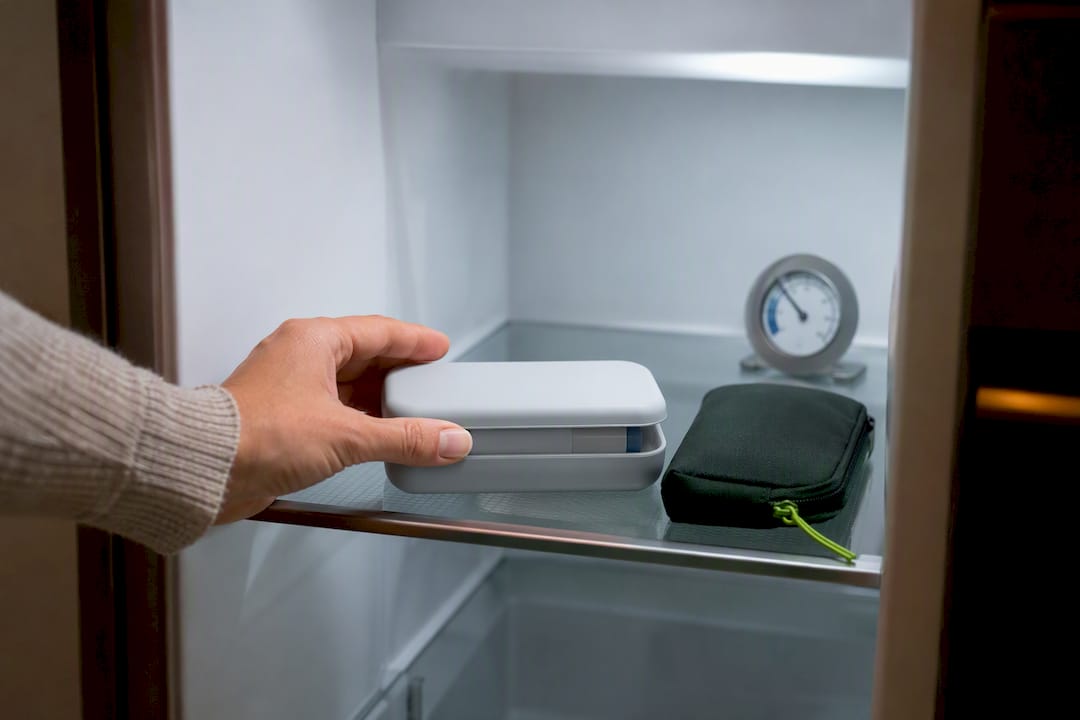
Storage matters just as much as technique. Unused pens need refrigeration between 36°F and 46°F until first use. Once a pen is in use, most formulations tolerate room temperature (up to 86°F) for a limited window, typically several weeks, but the exact number of days varies by product and is printed on the pen itself. Never freeze semaglutide, and discard any pen that’s been frozen or exposed to direct heat or sunlight for extended periods. Oak Longevity’s semaglutide storage guidance walks through product-specific windows in more detail, and the subcutaneous injection technique guide covers site rotation in more depth if you want a visual walkthrough.
Missing a weekly injection isn’t a crisis, but the correct response depends entirely on how much time has passed.
Restarting titration after a long gap isn’t a punishment. It’s the same tolerability logic that governs the initial escalation, applied a second time.
Gastrointestinal symptoms are, by a wide margin, the most common reason semaglutide dosing gets adjusted. Nausea, constipation, diarrhea, and occasional vomiting show up most often in the first weeks after each dose increase, then tend to ease as the body adjusts, according to the Mayo Clinic’s patient-facing dosing summary.
A number worth remembering: the PMC clinical review found that GI adverse events rise in step with dose, meaning the same 2.4 mg dose that produces the strongest weight-loss results is also the dose most likely to cause nausea severe enough to warrant a delay in escalation.
Practical ways to manage GI symptoms during titration:
Some warnings go well beyond routine GI discomfort. Semaglutide carries a boxed warning regarding thyroid C-cell tumors observed in rodent studies, and it’s contraindicated in anyone with a personal or family history of medullary thyroid carcinoma or Multiple Endocrine Neoplasia syndrome type 2. It’s also contraindicated during pregnancy, and effective contraception is generally recommended for people who could become pregnant while on treatment.
Seek urgent medical care for:
The FDA’s warnings extend beyond the approved products themselves. Its alert on compounded semaglutide dosing errors specifically flags that patients using non-FDA-approved versions have experienced adverse events tied to incorrect dosing, reinforcing why sourcing matters as much as the schedule itself.
Semaglutide’s labeling is notably permissive on one front and cautious on another. No dose adjustment is recommended for renal impairment, including patients with severe kidney disease, based on pharmacokinetic data reviewed in the approved labeling. Hepatic impairment similarly doesn’t require a specific dose adjustment, though patients with severe liver disease were studied in smaller numbers, so clinicians tend to monitor more closely rather than change the schedule outright.
Older adults follow the identical titration schedule as younger adults, with no age-based dose ceiling. In practice, though, elderly patients and those with lower body weight often tolerate the higher maintenance doses less comfortably, which is why prescribers sometimes hold at 1 mg or 1.7 mg rather than pushing to 2.4 mg on the standard timeline.
Pediatric use is limited: semaglutide is approved for weight management in adolescents ages 12 and up, following an escalation schedule that mirrors the adult titration through 2.4 mg maintenance, adjusted for tolerability.
When standard escalation doesn’t work, clinicians have real options rather than an all-or-nothing choice:
Comorbidities and polypharmacy deserve their own scrutiny during dose planning, not just at the initial prescription. Semaglutide slows gastric emptying, which can alter the absorption of oral medications taken around the same time, and it can meaningfully lower blood sugar when combined with insulin or sulfonylureas, sometimes requiring a reduced dose of those other medications rather than a change to the semaglutide schedule itself.
Semaglutide overdose typically results from dosing errors rather than intentional misuse. The most common scenario involves confusing pen strengths or, with compounded products, a measurement error when drawing up a dose from a multi-dose vial. Symptoms of overdose generally mirror an intensified version of standard side effects: severe nausea, vomiting, and diarrhea are the most frequent, sometimes severe enough to cause dehydration.
If low blood sugar develops as a result of overdose, particularly in patients also using insulin or a sulfonylurea, symptoms can include shakiness, sweating, confusion, rapid heartbeat, or in severe cases, loss of consciousness.
If you suspect an overdose:
There is no specific antidote for semaglutide overdose. Management is supportive: treating dehydration, correcting blood sugar, and monitoring until symptoms resolve, which given the drug’s extended half-life can take longer than a typical medication overdose would.
Semaglutide doesn’t interact with most medications through the liver enzyme pathways that cause many classic drug interactions. Its main interaction risk comes from a mechanical effect: it slows gastric emptying, which changes how other oral drugs get absorbed and how blood sugar behaves when combined with other diabetes medications.
The interaction that matters most clinically involves insulin and sulfonylureas (like glipizide or glimepiride). Combining either with semaglutide raises the risk of hypoglycemia significantly enough that many prescribers reduce the insulin or sulfonylurea dose when starting semaglutide, rather than adjusting the semaglutide schedule itself.
Oral contraceptives and other tightly-timed oral medications deserve attention too, since delayed gastric emptying can shift how quickly they’re absorbed. This is less of a concern with the injectable forms and more relevant with Rybelsus tablets, which already require a strict empty-stomach, 30-minute window before other oral medications.
Other points worth flagging with your prescriber or pharmacist:
None of these interactions typically require changing the semaglutide dose itself. They more often require adjusting the other medication.
Semaglutide titration isn’t a “set it and forget it” process, even though the weekly injection routine can feel that way after a few months. Monitoring needs shift depending on the indication and what other conditions are being managed.
For patients using semaglutide for type 2 diabetes, blood glucose monitoring and periodic A1C checks (typically every 3 months) guide whether the dose should climb further or hold steady. A1C trending down steadily at a given dose is often reason enough to stay there rather than push toward the 2 mg ceiling.
For weight management patients without diabetes, formal glucose monitoring is less central, but weight, waist circumference, and tolerability get tracked at each escalation step, generally at the same 4-week intervals that mark each dose increase.
Across both indications, a few checks apply broadly:
The general pattern: checkpoints line up with escalation steps, roughly every 4 weeks, tapering to less frequent check-ins once maintenance dose is reached and tolerated well.
Most dosing content online treats the titration schedule as the whole story. It isn’t. The label tells you what dose to reach and roughly when. It says almost nothing about what to do the week your patient can’t keep food down at 1 mg, or whether to hold, step back, or push through.
That judgment call, not the chart, is where most treatment actually succeeds or fails. The clinical literature is honest about the trade-off: higher doses mean more weight loss and more GI burden, and there’s no dose that maximizes one without inviting more of the other. Anyone promising an escalation shortcut that skips that trade-off is glossing over the actual evidence.
What I’d prioritize first: tolerability over speed. A patient who holds comfortably at 1.7 mg for a year will usually do better than one who muscles through to 2.4 mg and quits at month four. The schedule is a framework, not a race, and the best outcomes come from prescribers willing to slow it down when the body says so.
— Eric
Reading a titration chart is one thing. Having a licensed physician actually adjust your dose when week 9 brings nausea that week 5 didn’t is another. Oak Longevity built its telehealth process around that gap: an online questionnaire, physician review, and a prescription decision that accounts for your specific tolerability, not just a generic schedule.

Once approved, medication ships directly to your door, and support doesn’t stop at delivery. Oak Longevity pairs each prescription with 24/7 access to guidance during escalation, so a rough week doesn’t mean guessing whether to push forward or hold at your current dose. The program also layers in strength and lifestyle protocols designed to protect lean muscle mass while the medication does its work, plus educational resources on storage and administration through the Oak Journal for anyone who wants the details in writing.
If you’re ready to start with a schedule that adjusts to how your body actually responds, review the Oak Longevity program and begin your consultation today.
This article is general information, not a substitute for advice from a qualified doctor. Consult a qualified healthcare professional about your own circumstances before acting on anything here.